Sarasota furnace and heating work
Furnace Repair in Sarasota, FL
Gas and electric furnaces, heat pumps and electric resistance heat for homes across Sarasota and Sarasota County. The business is based at 1965 Hibiscus Street, Sarasota, FL 34239, USA, and every visit starts by finding out why the heat stopped rather than by quoting a replacement.
- Gas and electric furnaces
- Heat pumps and electric heat
- Sarasota and Sarasota County
What the company does
Furnace and Heating Work in Sarasota, Florida
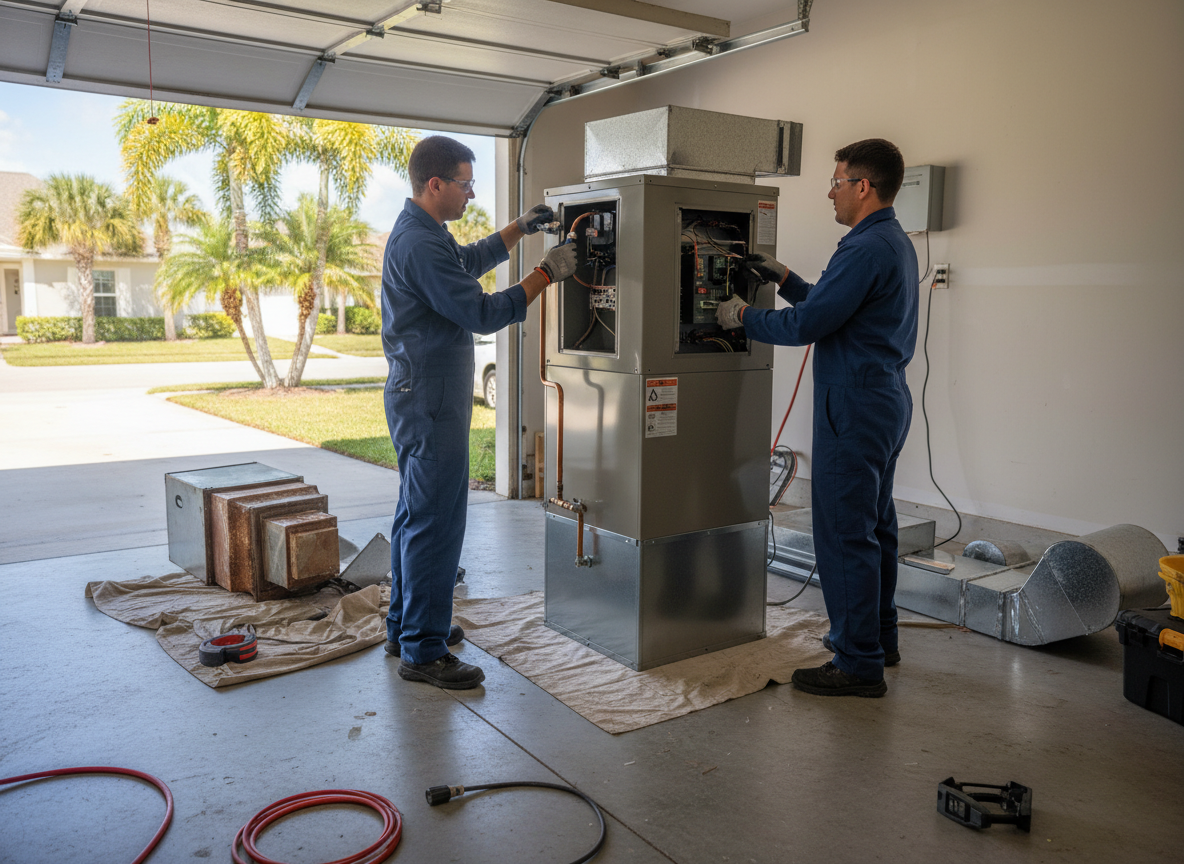
Furnace Repair
Diagnosis-led repair for gas and electric furnaces in Sarasota, working from the ignition sequence outwards.
Furnace Installation
New furnace installation in Sarasota, from load calculation and venting through to commissioning.
Furnace Replacement
Furnace replacement in Sarasota, from the decision through removal, code corrections and commissioning.
Heating Repair
Heating repair across heat pumps, electric heat and thermostats in Sarasota, with heating installation and heating maintenance covered on the same page.
About the company
About Furnace Repair Sarasota
Furnace Repair Sarasota is a heating business at 1965 Hibiscus Street, Sarasota, FL 34239, USA. The work is furnace and heating only: gas and electric furnaces, heat pumps, electric strip heat, and the thermostats and ductwork those systems depend on.
That narrow scope is deliberate. Heating sits where gas, electricity, combustion, refrigerant and building code meet, and a company that also sells drainage, remodels and general repairs rarely gets deep enough in any of them to find a stubborn fault. Here the same knowledge base covers a failed igniter in a Cherokee Park closet and a sticking reversing valve on a heat pump in Southgate.
- Based at 1965 Hibiscus Street, Sarasota, FL 34239, USA
- Gas and electric furnaces, heat pumps and electric strip heat
- Repair, installation and replacement covered on separate pages
- Diagnosis before a part is chosen
- Coverage across Sarasota and the surrounding neighbourhoods
- No phone number published and no message form on this site
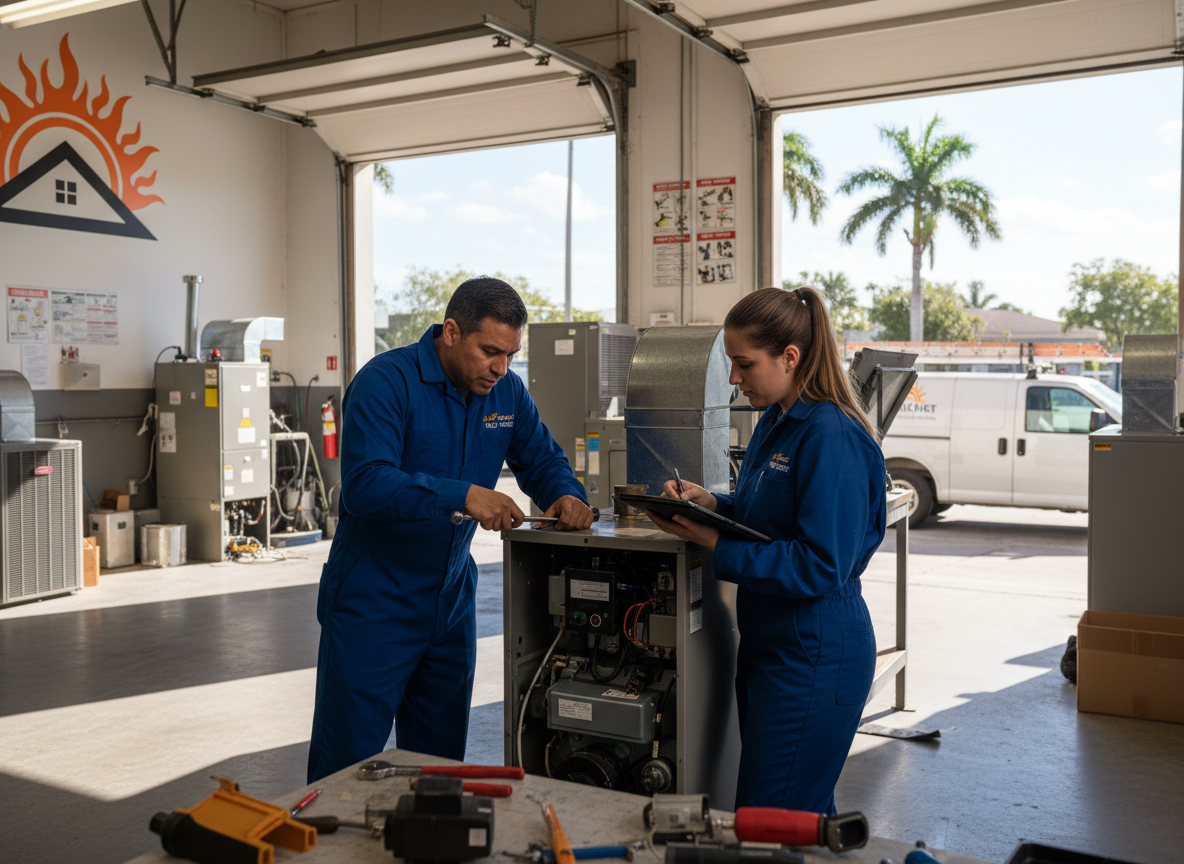
How a job runs
From first symptom to working heat
Describe What the Heat Is Doing
The visit starts with the symptom: no heat at all, heat that comes and goes, a unit that runs but blows cool air, a smell, a noise, a breaker that will not stay set, or a thermostat calling for heat with nothing happening. The address and the system type narrow the first checks before anyone arrives.
Read the Equipment
On site the data plate is recorded: make, model, capacity, fuel, age and system type, whether gas furnace, electric furnace, heat pump or strip heat in an air handler. Where the unit sits and how it is vented or drained sets what the visit will involve.
Test in Order
Supply first, then the thermostat and controls, then ignition or heating elements, then airflow, then the safety devices. Airflow is measured rather than assumed, because a loaded filter or a failing blower imitates several electrical faults convincingly.
Explain the Finding
The confirmed fault is described in plain terms, along with what it means for the rest of the system. Where repair and replacement are both reasonable, both are set out, including what each assumes about the age and condition of what is already installed.
Carry Out the Work
The agreed repair, changeout or installation is completed with power or gas isolated and the work area protected. Old parts are shown where it helps, and the space is left clean and dry.
Test and Hand Over
The system is run through a full heating cycle, checked for the right temperature rise or supply temperature, and confirmed to shut down cleanly. Filters, the disconnect, the thermostat schedule and the maintenance the system needs are explained before the visit ends.
What Sarasota Homes Need From Furnace and Heating Work
Heating in Sarasota is a small part of the year and a large part of the risk. A system that runs for six or eight weeks still has to work on the one cold night that matters, and what stops it is rarely what the owner expected. The approach here is simple: establish what the equipment is, test it in a fixed order, explain what the tests show, then do the work that follows from that.
Diagnosis Comes Before a New Furnace
A furnace that will not heat can be a failed hot-surface igniter, a flame sensor coated in oxide, a pressure switch that never closes, a tripped rollout switch, a control board that has lost its sequence, or on an electric unit a failed sequencer or element. Each has a different fix and a different cause behind it. Replacing the furnace is a conclusion the testing has to support, not the opening move on the first visit.
Gas and Electric Are Different Machines
A gas furnace lives or dies on combustion: gas pressure, ignition, flame proving, the inducer fan, the flue, and the rollout and limit switches that guard them. An electric furnace has no flame at all. It runs on sequencers, elements, limit switches and a blower. The tools and the order of testing are not the same, and treating one like the other turns a diagnosis into guesswork.
Heat Pumps Need Their Own Reading
A large share of Sarasota homes heat with a heat pump rather than a furnace. A heat pump that blows lukewarm air in January may have a stuck reversing valve, a defrost board that is not cycling, a failed outdoor fan motor, a low refrigerant charge, or auxiliary strips that never energised. None of those is a furnace fault, and diagnosing them as one leads to the wrong part being ordered.
A Short Season, and Houses That Sit Empty
NOAA's 1991-2020 normals for Sarasota-Bradenton put the average January low at about 52F, so heating here is a short season rather than a long one. Short is not the same as unused. Idle equipment fails on the first cold night: contactors pit, capacitors weaken, blower bearings dry out, and insects settle in flues and outdoor cabinets. The 2020 census counted 19.8% of the city's 31,366 housing units as vacant, which adds a second layer, because a house that sits empty meets its heating problem on the first morning of a stay.
Salt Air Changes What Fails
The city limits take in barrier islands, including Lido Key, St. Armands Key, Bird Key and the northern end of Siesta Key, and salt spray carries several miles inland. Coastal air corrodes condenser coils, electrical contacts, board connectors and cabinet screws. On island properties that corrosion is a routine part of the diagnosis rather than a surprise found halfway through a repair.
Mid-Century Houses, and Where the Ducts Went
The mid-century modern houses associated with the Sarasota School of Architecture were built with low-slope roofs, exposed structure and very little attic. Air handlers and duct runs end up in closets, chases and soffits instead. That shapes how a technician reaches the equipment, and it shapes what an installation can realistically reuse. In older neighbourhoods the ductwork has usually been altered at least once, and a crushed or disconnected run explains a surprising share of cold rooms.
Storm Season Is on the Calendar
Atlantic hurricane season runs from June 1 to November 30. Hurricane Milton came ashore at Siesta Key in October 2024, and the outages that followed left large parts of the county without power for days. A furnace, air handler or heat pump that has been under water, hit by a surge or left with a wet control board needs to be assessed before it is energised rather than after it trips a breaker.
Permits Treated as Part of the Job
Replacing a furnace or air handler is permitted work in Florida. Addresses inside the city limits are handled through the City of Sarasota's Development Services department, which reviews building permits and carries out inspections; unincorporated addresses go through Sarasota County. The permit and the inspection belong to the changeout rather than being sorted out afterwards, and the authority for the specific address always has the final word.
Coverage
Sarasota Areas Covered From Hibiscus Street
Furnace and heating notes
Heating Guides for Sarasota Homes
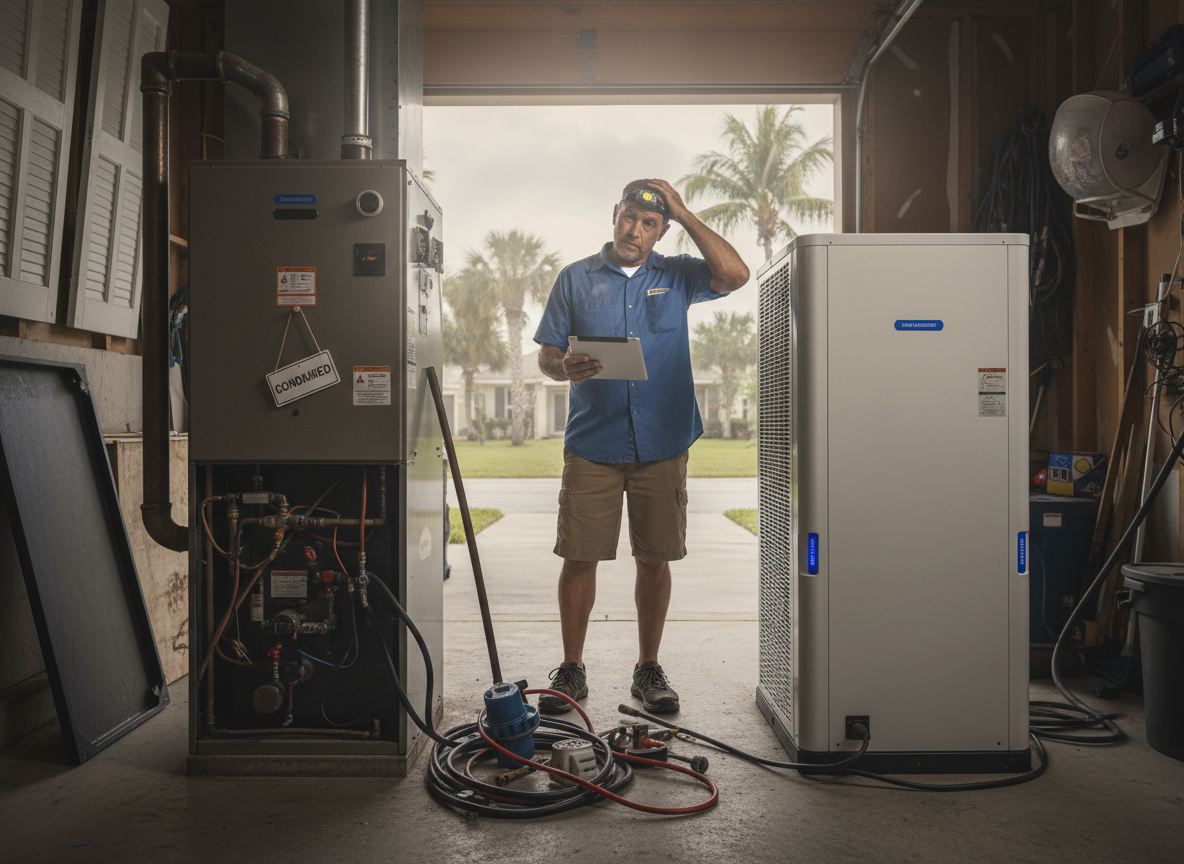
Common questions
Furnace and Heating Questions From Sarasota
The contact page lists the business address and the areas covered.